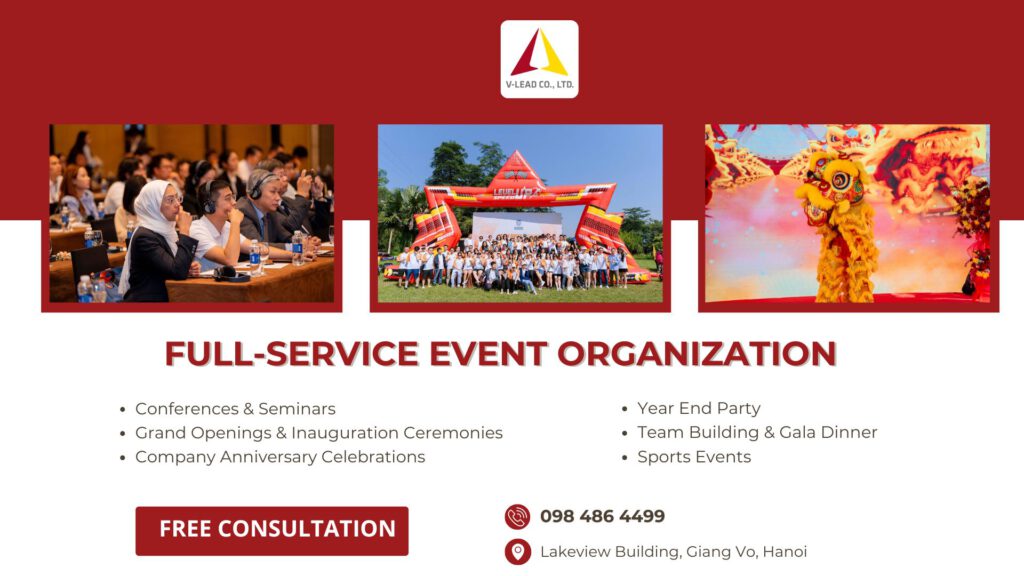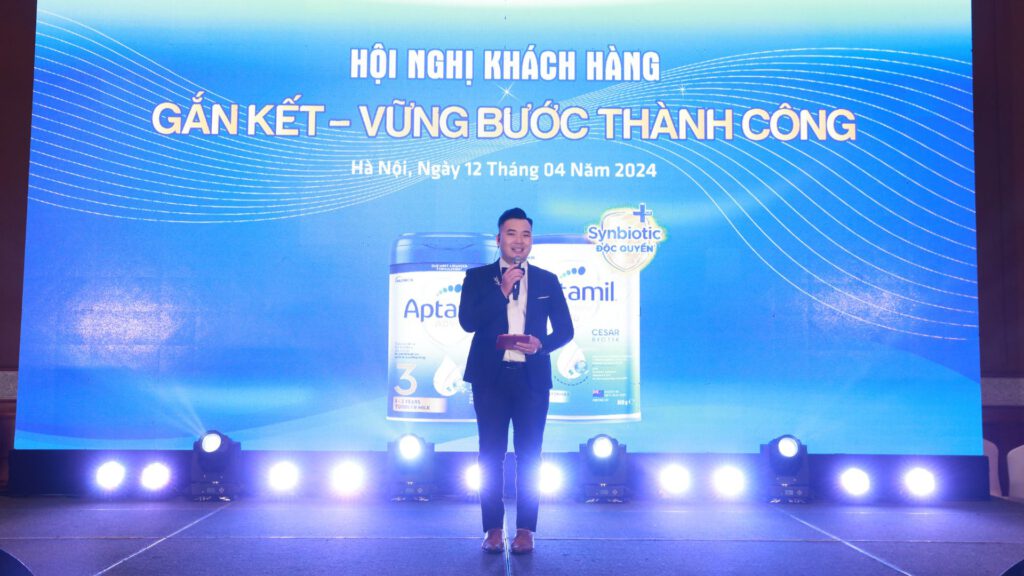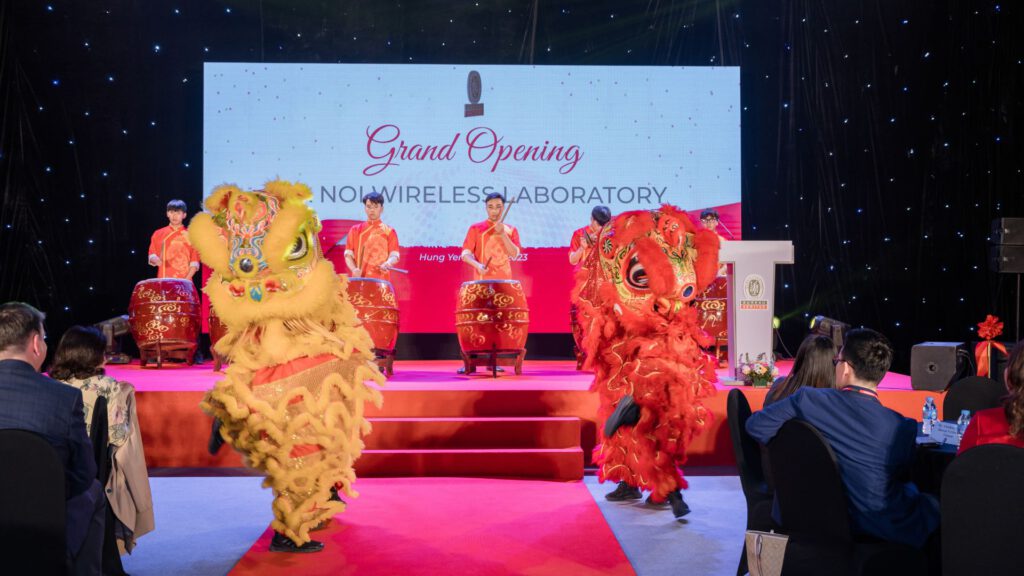


Organizing a Year-End Party is an important activity for most businesses at the end of each year. It is an occasion to look back on the past 12-month journey, acknowledge the contributions of the team, honor outstanding individuals, and create motivation for the upcoming year.
Right from the planning stage, businesses often encounter several questions
– How can the year-end event be organized to meet the right objectives?
– What theme or concept should be chosen to suit the company culture?
– Is the cost for organizing a year-end event transparent?
– Which service provider has enough experience to execute a full-package event?

This article provides detailed information on the entire process of organizing a year-end event, including costs, ideas, preparation checklists, practical experience, and the benefits of partnering with a professional agency like V-Lead Event.
1. The Role of Organizing a Year-End Event for Businesses
A year-end event is not just a closing party — it also brings significant value to corporate culture:
– Strengthening internal unity: Organizing a year-end event creates an opportunity for departments to come together, bridge gaps, enhance connection, and build team spirit. This serves as an important foundation for effective collaboration in the upcoming year.
– Recognizing collective and individual contributions: Commendation and awards presented during the year-end event help employees feel valued by the company, while also creating strong motivation for the journey ahead.
– Communicating the company’s message:Through the program flow, theme, and event activities, the leadership can clearly convey the company’s vision, direction, and strategic objectives to all employees.
– Enhancing brand image in the eyes of partners: If the company invites partners to attend, the Year-End Party becomes an opportunity to showcase professionalism, unique corporate culture, and a well-organized working style
2. Full-Service Year-End Event Planning Process
To ensure the event runs smoothly, a clear year-end event planning process is essential. This process typically includes the following steps:

2.1 Receiving Requirements and Providing Overall Consultation
The organizer collects information from the company regarding objectives, scale, target attendees, estimated budget, and desired style. Based on this, the most suitable concept is developed.
2.2 Developing the Year-End Event Theme Concept
The key phrase “organizing a year-end event” is applied throughout the theme creation process.
The concept is developed based on:
– Corporate culture
– Leadership messages
– Program objectives
– Overall brand image
2.3 Designing a Detailed Event Script (MC Flow – Run Sheet)
The script includes:
– Guest reception
– Check-in
– Opening ceremony
– Recognition and awards
– Dinner
– Games and mini shows
– Lucky draw
– Closing ceremony
2.4 Stage Design, Construction, and Decoration
This includes the following items:
– Main backdrop
– Check-in booth
– Photo corner
– Stage and LED screens
– Sound and lighting system
– Gallery tables and displays
2.5 Staff Coordination & Event Operations
A full-package year-end event requires:
– Producer
– Stage manager
– MC
– Sound and lighting technicians
– Support team for guest flow and reception
2.6 Risk Assessment and Safety Assurance
This includes fire safety, security, health measures, equipment backup, and weather contingency (for outdoor events).
2.7 Event Wrap-Up and Handover
After the program, the organizer provides:
– Photos and videos
– Summary report
– Transparent invoices and documents
– Performance evaluation based on the set objectives
3. What Does the Cost of Organizing a Year-End Event Include?
The cost of organizing a year-end event usually depends on the company’s scale and requirements. The main cost categories are:
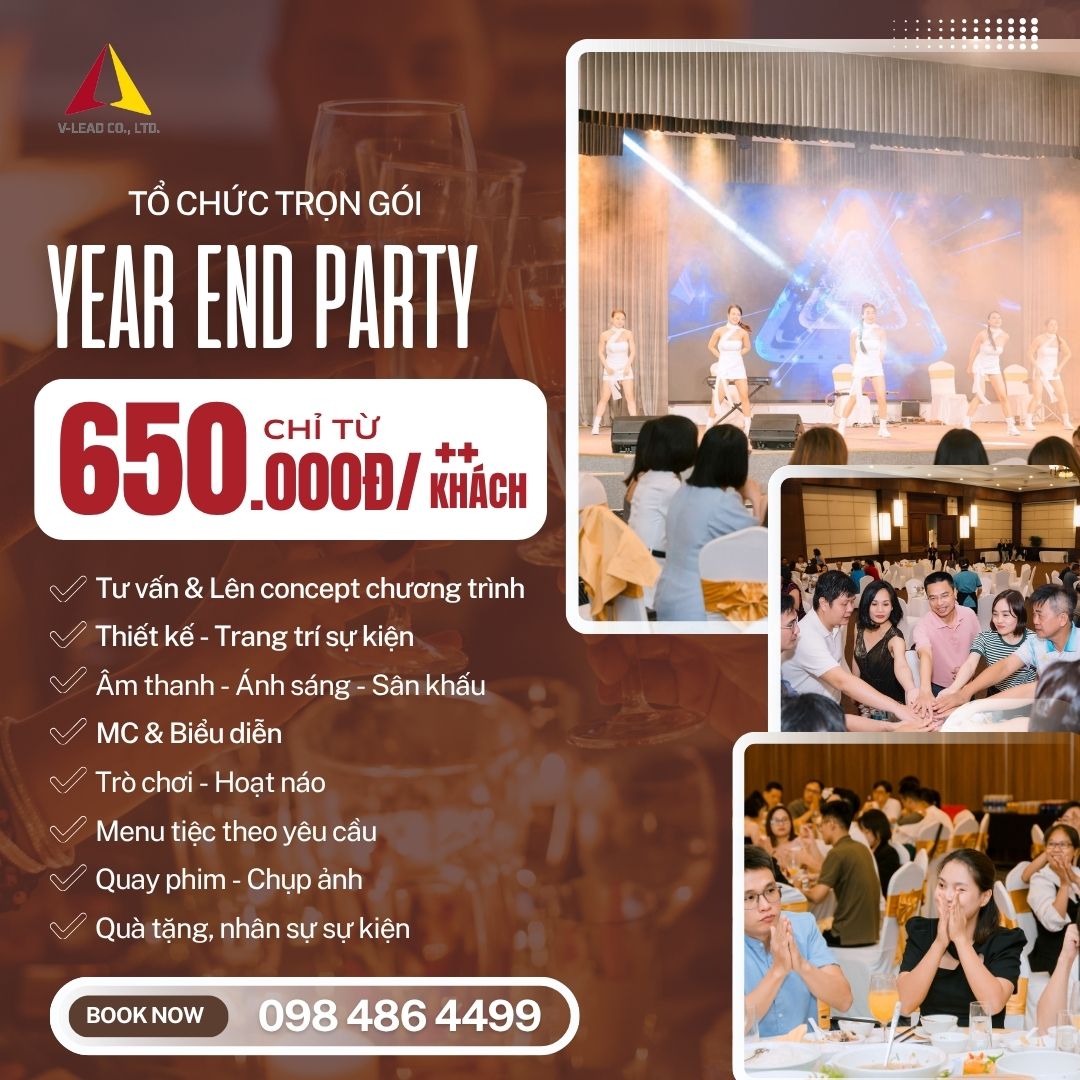
With the goal of helping businesses optimize costs while ensuring program quality, V-Lead Event offers a full-package Year End Party service starting from just ₫650,000++ per person, suitable for companies with fewer than 150 employees.
The price already includes essential items such as dining, stage, sound and lighting, MC hosting, and mini-games to liven up the atmosphere.
Depending on actual needs, V-Lead will provide consultation and design a customized package with concepts, spaces, and event styles tailored to each company’s culture—from simple decorations to exclusive scripts, artistic performances, or integrated team-building activities.
Based on the size and specific requirements of each company, V-Lead Event will provide personalized consultation and a tailored quotation, ensuring alignment with the budget and desired event style. Companies can also choose additional upgrades such as LED screens, artistic performances, integrated team-building activities, or exclusive decor concepts, making the program more impressive and distinctive.
– Venue Costs
Conference halls
Hotels
Restaurants
Resorts
Outdoor spaces
– Production & Design Costs
Backdrop
Decor layout
Photo booth
Photo corner
Recognition boards
Standees
LED systems and technical equipment
– Operational Staff Costs
MC
Event organizers
Technicians
Reception staff
Singers, artists, and performers
– Food & Beverage and Related Services Costs
Set menu
Beverages
Gifts
Beer or wine packages if requested
– Contingency Costs
The contingency rate usually accounts for about 5–10%, depending on the scale and nature of the event.
4. Year-End Event Ideas Suitable for Businesses
4.1 Traditional Style Year-End Party
Suitable for companies seeking a formal and cozy atmosphere. Typical activities include:
Opening ceremony
Year-end report
Employee recognition
Cultural or entertainment performances
4.2 Modern Concept Year-End Party
– Countdown
– Glow Party
– Business Lounge Concept
– Live Music, DJ, LED displays
4.3 Year-End Party Combined with Team Building
For companies looking to create a unique experience and strengthen internal bonding before the evening party.
– Outdoor activities
– Team races
– Puzzle or treasure hunt challenges
4.4 Brand-Themed Year-End Party
All design, concept, music, and visuals are aligned with the company’s brand colors and image direction.
5. Year-End Event Planning Checklist for Businesses
Checklist 1: Pre-Event Planning (at least 30–45 days before)
– Define objectives
– Select the venue
– Finalize the budget
– Develop the concept
– Approve the main script
Checklist 2: Implementation Phase (20–30 days before)
– Design the backdrop
– Construct models or props
– Prepare the awards list
– Select the MC and performances
Checklist 3: Event Operation Phase
– Technical rehearsal
– Test sound and lighting
– Check responsible staff
– Prepare gifts and lucky draw items
6. Reasons Businesses Should Use Full-Package Year-End Event Services
– Time-saving: Companies can reduce a large workload and avoid spreading staff across multiple tasks.
– Ensured event quality: From design and technical setup to event operations, everything is handled by professionals.
– More cost-effective than self-organizing: Event organizers often have established relationships with restaurants, hotels, and service providers, resulting in better pricing.
– Reduced risks and mistakes: A professional team always has contingency plans for any situation.
V-Lead Event – Your Trusted Partner for Year-End Event Organization
V-Lead Event – A Professional Full-Service Event Organizer for Businesses in Vietnam
Key highlights when choosing V-Lead Event:
– A consulting team with deep understanding of corporate culture
– Unique, tailor-made ideas and concepts
– Direct design and construction to optimize costs
– Full support from preparation to event execution
– Commitment to transparent budgeting and clear quotations
– Professional event management approach
If your company is looking for a full-service year-end event organizer, V-Lead Event is ready to partner with you to create a well-executed, meaningful program that aligns perfectly with your objectives.