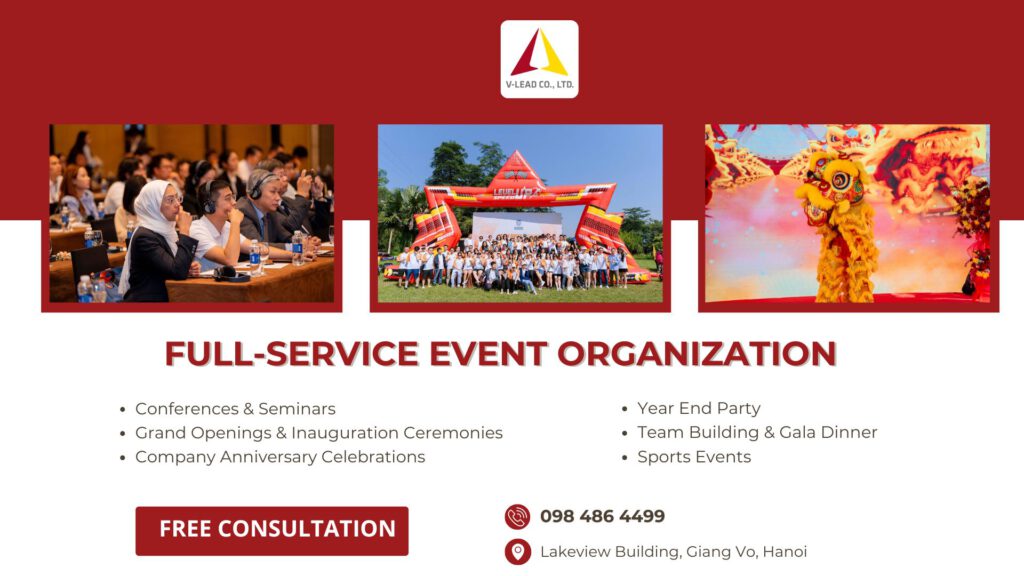


What Does Event Organization Involve? This is a common question for many people when they first enter the field. Event organization is not simply about planning a ceremony or activity; it also involves executing and coordinating multiple elements to create the best possible experience for all participants.
1. Key Stages in Event Organization
When it comes to event management, it is important to understand that this is a complex process requiring thorough preparation and close attention to even the smallest details. Below are the main components that make up the event organization process.

1.1 Defining Objectives and Target Audience
First and foremost, clearly defining the objectives of the event is essential. You need to determine the purpose of the event—whether it is to launch a new product, celebrate a company anniversary, or organize a professional seminar. Clear objectives make planning and resource allocation much more effective.
The target audience is also an indispensable factor.You need to understand who they are, their interests, and their expectations of the event. This insight helps you design a program that is relevant, engaging, and appealing to participants. “What does event management include?” is a common question for many people who are just entering this field. Event management is not merely about planning a ceremony or activity; it also involves executing and managing various elements to deliver the best possible experience for all attendees.
1.2 Detailed Planning
After defining the objectives and target audience, the next step is to develop a detailed event plan. This plan covers a wide range of elements, including:
– Time: When will the event take place? The timing should be chosen to best suit the schedule of the target audience.
– Venue: The event venue has a significant impact on the atmosphere and overall experience of guests. It should offer sufficient space and appropriate facilities to meet the event’s requirements.
– Budget: Determine the available budget and allocate expenses for each item, such as decoration, catering, venue rental, and marketing or communication activities.
1.3 Implementation and Execution
Once the plan has been finalized, the next step is to implement and carry out the planned tasks. This phase requires close coordination among all involved teams and departments.
It is necessary to prepare sound and lighting systems, venue decoration, and other technical elements to ensure the event runs smoothly. At the same time, you need to recruit a professional service team to support operations throughout the event.
1.4 Evaluation and Review
Finally, after the event concludes, evaluation and review are essential. You should collect feedback from participants and relevant stakeholders to draw lessons for future events. This process helps continuously improve the quality and effectiveness of your event management.
2. What Tasks Are Involved in Event Management?
In addition to understanding the fundamental elements of event organization, it is also important to explore the specific tasks involved in event management in order to gain a comprehensive view of the entire process.
2.1 Content Preparation
The content of an event is the soul of the entire program. It includes not only speeches and seminars but also entertainment and networking activities.

Content preparation should be based on the target audience. For a professional conference or seminar, the content needs to be in-depth and academically oriented. In contrast, for a party or social event, the content can focus more on entertainment and social interaction. A rich and diverse program will capture guests’ attention and keep them engaged.
2.2 Logistics Management
Logistics is one of the most critical aspects of event management. It includes managing transportation, accommodation, and catering services for the event.
You must ensure that everything—from the venue and guests to equipment and supplies—is arranged in a systematic and well-organized manner. Effective logistics management not only ensures smooth event operations but also leaves a positive impression on attendees.
2.3 Communication and Promotion
Communication and promotion are indispensable parts of the event organization process. Informing guests in advance helps build excitement and anticipation for the event.
Social media channels, email marketing, and websites are effective tools for connecting with guests. Make sure your messages are clear, consistent, and compelling to capture the attention of your target audience.
2.4 Monitoring and Adjustment Full-service event organization
Throughout the event, continuous monitoring is essential. You need to oversee all activities to ensure everything proceeds according to plan.
If any issues arise, respond quickly by resolving or adjusting as needed to keep the event running smoothly. This may involve modifying the schedule, adjusting content, or coordinating with the logistics team to address unexpected situations.
3. Frequently Asked Questions About Event Management
– What does event management include?
Event management includes defining objectives, planning, implementation, and post-event evaluation.
– What tasks are involved in organizing an event?
The tasks include content preparation, logistics management, communication and promotion, as well as monitoring and adjustment during the event.
– Is it necessary to have a professional team for event organization?
Yes. A professional team helps you save time and significantly enhance the quality and effectiveness of the event.
– How can an event be promoted effectively?
Using social media channels, email marketing, and websites to inform and attract guests is an effective approach.
– How can the effectiveness of an event be evaluated?
You can collect feedback from guests and relevant stakeholders to draw lessons and improve future events.